Deep Ancestries in Admixed Latin American Genomes
This project integrates large-scale genomic resources of living and ancient populations to investigate the impact of deep demographic and evolutionary history on modern Latin American populations.

Unravelling the genetic history of Indigenous American and descendant populations
Postdoctoral Researcher · Section for GeoGenetics, Globe Institute
University of Copenhagen, Denmark
I am a postdoctoral researcher at the Globe Institute's Section for GeoGenetics, University of Copenhagen, Denmark. In December 2026, I will begin a "la Caixa" Postdoctoral Junior Leader Fellowship at the Institut de Biologia Evolutiva (IBE-CSIC), Universitat Pompeu Fabra, in Barcelona, Spain.
My research combines population genetics, anthropological genetics, archaeogenetics, and bioinformatics to investigate the evolutionary history and genetic diversity of Indigenous and descendant populations across the Americas, both past and present. I investigate how migration, admixture, population growth or collapse, and adaptation have shaped human genetic diversity over time. My work aims to uncover the deep and recent population histories of the Americas while contributing to a more inclusive understanding of global human diversity through the study of historically underrepresented populations.
Currently, I am particularly interested in how ancient demographic and evolutionary processes have shaped the genetic diversity of Indigenous populations in the Americas. I have also been investigating the genetic history of non-indigenous Latin American populations, which are characterized by complex admixture. More recently, I have been exploring how these processes have influenced the phenotypic diversity of modern-day populations, including patterns of natural selection and clinically relevant variation.
To address these questions, I integrate large-scale genomic datasets from both living and ancient individuals with population genetic theory, statistical and demographic modeling, and computational approaches, to reconstruct human population history and explore the evolutionary forces shaping human diversity.
Starting my “la Caixa” Postdoctoral Junior Leader Fellowship at the Institut de Biologia Evolutiva (CSIC-UPF), Barcelona.
Joined the Section for GeoGenetics, Globe Institute, University of Copenhagen as a postdoctoral fellow.
New paper in JACC: Advances on the prevalence of pathogenic genetic variants across heart failure etiologies in an admixed population.
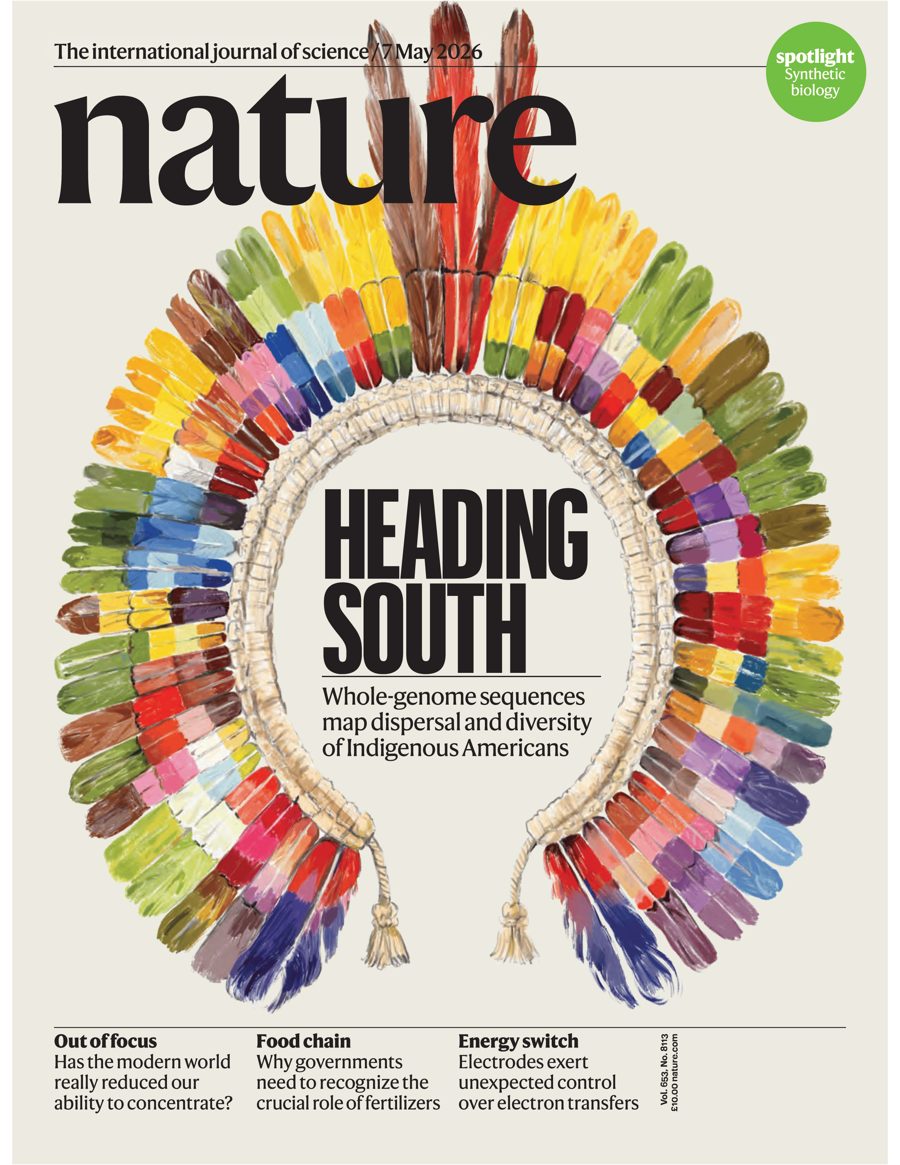
Our paper on the evolutionary history of Indigenous Americans is the cover feature of Nature (7 May 2026 issue, vol. 653). See the cover.
“The evolutionary history and unique genetic diversity of Indigenous Americans” is out in Nature, with a Research Briefing and wide media coverage.
Received the Seal of Excellence from the Marie Skłodowska-Curie Actions (MSCA Postdoctoral Fellowships 2025) for the proposal “Deep Population History of Admixed Americans”.
Giacomo Francesco Ena, whom I co-supervised, defended his PhD with cum laude honors at Universitat Pompeu Fabra.
Received the Young Investigator Attendance Award for the SMBE 2025 conference.
“Admixture’s impact on Brazilian population evolution and health” — the “DNA do Brasil” project — is published in Science.
My research spans interconnected themes in human population genomics, anthropological genetics, and archaeogenetics:
This project integrates large-scale genomic resources of living and ancient populations to investigate the impact of deep demographic and evolutionary history on modern Latin American populations.
A collaborative international effort designed to map the origins and genetic diversity of Indigenous populations through whole-genome sequencing.
A research initiative using whole-genome sequencing data to characterize genetic diversity in Brazilian populations and its health implications.
In collaboration with David Comas, I co-supervised a PhD student investigating the origins, genetic structure, and demography of Iberian and European Romani populations.
As part of my PhD with Tábita Hünemeier, I traced the genomic origins of the Brazilian coastal natives, showing that the spread of Tupi-Guarani languages and culture from the Amazon to the Atlantic coast and Southern Brazil was driven by population dispersal rather than cultural diffusion.
The project behind my FAPESP-funded PhD with Tábita Hünemeier at the Universidade de São Paulo. I investigated the genetic diversity and population histories of native Brazilians and South Americans, from the initial settlement of the continent to Late Holocene population expansions and the impact of European colonization.
During my MSc in Genetics and Plant Breeding with Marcio de Castro Silva Filho at the Universidade de São Paulo, I studied the convergent evolution of the chloroplast protease FtsH5 and its putative negative regulator FIP. FIP is a zinc-finger protein in the thylakoid membrane, and we showed that it is involved in Arabidopsis responses to high light, oxidative, salt and osmotic stress.
As an undergraduate with Elizabeth Fontes at the Universidade Federal de Viçosa, I analysed how Arabidopsis immune genes are expressed in response to geminiviruses. This work contributed to the discovery that the immune receptor NIK1 defends plants against begomoviruses by suppressing the host's global protein translation.
Indigenous American populations remain markedly underrepresented in global genomic research, limiting our understanding of the evolutionary history and genetic diversity of the last continent settled by humans. To address this gap, we generated and analyzed 128 high-coverage whole-genome sequences from individuals representing 45 Indigenous ethnic groups across eight Latin American countries (Argentina, Bolivia, Brazil, Colombia, Ecuador, Mexico, Paraguay, and Peru), spanning 28 language families and a wide range of environments from the Arctic to the tropical lowlands and the Andes. These data were integrated with genomes from ancient individuals and worldwide populations to reconstruct the demographic history of the Americas while accounting for recent European and African admixture through local ancestry inference.
Our analyses uncovered more than one million previously undocumented genetic variants, highlighting the distinctive evolutionary history of Indigenous Americans and their persistent underrepresentation in global databases. We detected strong geographic structure in genetic variation, with patterns of similarity broadly reflecting geography over millennia. Comparisons with ancient DNA revealed evidence for multiple dispersals into South America, including a previously uncharacterized Late Holocene migration related to Mesoamerican populations that contributed to present-day South Americans and ancient Caribbean individuals. Despite these movements, several regions show long-term genetic continuity, indicating deep local ancestry maintained over thousands of years. We also identified signatures of natural selection, including adaptive introgression, affecting genes involved in immune response, metabolism, growth, and reproduction, consistent with adaptation to diverse environments across the American continent. In addition, our results support the hypothesis that the Australasian-like ancestry component (also known as “population Y” ancestry) reflects an ancient admixture event that contributed to the formation of the first Americans and was partly preserved by selection.
Together, these findings provide one of the most comprehensive views of Indigenous American genomic diversity to date, showing that the genetic landscape of the continent was shaped by multiple dispersals, regional continuity, and adaptation to highly diverse environments. The study also demonstrates that substantial human genetic variation remains undocumented, including variants with potential biomedical relevance, underscoring the importance of expanding genomic research in partnership with Indigenous communities to achieve a more complete and equitable representation of human diversity.
This research, on which I am first author, was published in Nature in April 2026 and featured on the cover of the 7 May 2026 issue. The underlying dataset is publicly available through the European Genome-Phenome Archive (EGA) under controlled access (EGAS50000001664). To facilitate data exploration, we also developed an interactive genome browser (IAGDP Browser) that allows users to visualize variant-level and allele-frequency information specific to Indigenous American populations. The results have been presented at multiple international conferences and seminars, including the 2025 meeting of the Society for Molecular Biology and Evolution, where I delivered the presentation.
Brazil, home to Latin America's largest population and the world's most extensive recently-admixed population, remains significantly underrepresented in global genomic research. As part of the Brazilian Ministry of Health’s DNA do Brasil project, we analyzed 2,723 high-coverage whole-genome sequences from individuals spanning the country's diverse ecoregions and ethnic backgrounds. Our study revealed an extraordinary level of genetic diversity compared to global reference datasets, identifying millions of novel variants—including thousands with potential deleterious effects. Notably, we observed a positive correlation between the number of deleterious variants and individual ancestry components.
Our findings portray the Brazilian population as a complex mosaic of global haplotypes, shaped by centuries of non-random mating, with peak admixture occurring in the 18th and 19th centuries. We uncovered fine-scale population structure both spatially and temporally, and identified candidate genes under selection both pre- and post-contact, particularly those related to fertility, immune function, and distinct metabolic traits. These insights highlight the profound influence of Brazil’s ancestral diversity on the genetic landscape and health of its admixed population.
This research was recently published as an Open Access article in Science (May 15, 2025), on which I am co-first author. The underlying dataset is publicly available through EGA (EGAS50000000730) under a data access agreement. To facilitate access for public health officials and clinicians, we also developed an interactive genome browser (DNABR Browser) that enables users to explore variant-level and allele frequency data specific to the Brazilian population.
The DNA do Brasil project was funded by the Brazilian Ministry of Health. My contributions to this work were supported by the European Union’s Horizon 2020 programme (Marie Skłodowska-Curie grant No. 945380) and the Spanish Agencia Estatal de Investigación (AEI). The study’s results have been presented by the co-first and corresponding authors at numerous national and international scientific conferences and seminars. Since the publication, the article has received widespread attention, with over 40,000 downloads and media coverage by more than 30 international and Brazilian news outlets.
The Roma people, with South Asian origins, migrated westward about 1,000 years ago, settling in Europe, particularly the Iberian Peninsula, are the largest ethnic minority in Europe. This study is the most extensive genome-wide analysis of 181 Iberian Roma individuals, confirming their South Asian origins and revealing significant gene flow from populations encountered during migration. We found no genetic evidence supporting previous hypotheses of a North African migration route into Iberia or connections to Jewish populations. The Iberian Roma showed substantial genetic differentiation from non-Roma Iberians, as well as significant regional substructure. We also identified assortative mating within Roma groups, suggesting distinct mating patterns and increasing integration with non-Roma. These findings shed light on their complex demographic history, the influence of historical migrations, and the ongoing social dynamics shaping their genetic diversity, with potential implications for health risks in Roma and related populations.
This study has been published in Human Genetics, and as co-supervisor of the first author (Giacomo Ena), I contributed to the methodology, study design, writing, and editing of the manuscript. Our results have been presented by the first and corresponding authors at Spanish and international scientific conferences and seminars. This study was conducted under the project "El Camí del Poble Gitano: una història de diversitat" in collaboration with the Federation of Roma Associations of Catalonia. Preliminary findings were shared by the corresponding author with the local Roma community during a meeting at UPF in Barcelona, which was also streamed on YouTube. The newly sequenced data was made publicly available through a data access agreement on EGA (EGAS50000000746).
This study examines the population history of South American Indigenous peoples, focusing on factors shaping their genetic diversity and geographic distribution. Using the largest genome-wide dataset of Indigenous Americans at the time, we analyzed 58 populations across the Amazon, Cerrado, Atlantic coast, Andes, Pacific coast, and Mexico, offering a broad view of the genetic landscape of the Americas. Our findings challenge the expected genetic divide between Andean and Amazonian populations, revealing a longitudinal genetic variation likely formed during the initial settlement of the continent. We also observed a west-to-east increase in inbreeding coefficient, shaped by geographical isolation and serial population bottlenecks. These results highlight the roles of isolation by distance and demographic history in shaping Indigenous genetic diversity. We further reconstructed the severe population collapse during European colonization, evidencing its devastating impact. Additionally, we uncovered a case of linguistic replacement in western Amazonia, emphasizing the complexity of pre-Columbian population interactions.
This research, published in Molecular Biology and Evolution, represented the most comprehensive chapter of my PhD thesis. Conducted in collaboration with an international team from multiple institutions, I was primarily responsible for performing the genomic analyses and writing the manuscript, with valuable input from coauthors. This research was supported by funding from the Fundação de Amparo à Pesquisa do Estado de São Paulo (FAPESP, Brazil) with my personal funding provided initially by the Conselho Nacional de Desenvolvimento Científico e Tecnológico (CNPq; Brazil) and later through a competitive grant from FAPESP. The study is published as an Open Access article, and the datasets reported in this article have been deposited in EGA (EGAD00010002061 and EGAD00010001803).
The study has been cited by independent research groups in high-impact journals such as MBE and Cell Genomics. Furthermore, it has achieved a High Attention Score, ranking in the 96th percentile among publications of the same age, as reported by Altmetric. The findings were presented at multiple national and international scientific conferences and seminars and shared through a network of research collaborators who adapted their dissemination for local Indigenous communities. The study also attracted significant attention from prominent Brazilian and international media outlets.
Genetic evidence shows that all non-Arctic Native Americans share a common ancestor that entered the Americas via Beringia around 16,000 years ago. However, some Indigenous groups in the Amazon and Central Brazilian Plateau exhibit unexpected genetic similarities with populations from South Asia, Melanesia, and Australia. This unexpected affinity suggests previously unknown contributions to South American Indigenous ancestry.
Our research investigated this Australasian-like signal in South American populations, linked to a hypothesized and unsampled ancestral group, "Ypikuéra" or "Y." Using a genome-wide dataset, we found this signal extends beyond the Amazon to the Central Brazilian Plateau, southern Center-West, and Pacific coast, spanning both sides of the Andes. Our models suggest this ancestry spread along the Pacific coast during early dispersals, offering new insights into South America's genetic history.
This study, published in PNAS, was an integral part of my PhD. Project collaborators included my PhD supervisor, Tábita Hünemeier; Tiago Ferraz, another PhD student under her supervision specializing in archaeogenetics and affiliated with the Max Planck Institute for the Science of Human History (Jena, Germany); and Maria Cátira Bortolini, a prominent authority on the study of Indigenous Americans in Brazil. Together with Tiago Ferraz, I was responsible for conducting the genomic analyses, while I wrote the paper with input from coauthors. This research received financial support from the FAPESP, while my personal funding came from the CNPq during part of the project and later from a competitive grant awarded by FAPESP. The publication is freely available through Open Access, and the newly generated genotypic data can be accessed via EGA under accession number EGAS00001005022.
The study has been cited by independent research groups in high-impact journals such as Science and Nature. Furthermore, it has achieved a High Attention Score, ranking in the 99th percentile among publications of the same age, as reported by Altmetric. The findings were presented at several national and international scientific conferences and seminars. Additionally, the results were communicated through a network of research collaborators, who tailored their dissemination to local Indigenous communities. The study also gained attention from important media outlets both Brazilian and international, as well as science communicators.
Here we revealed the relationships among the Tupi from the Brazilian coast, Amazon, and Central-West Brazil human populations, as well as ancient individuals, retracing their dispersal routes from the Amazon to the Atlantic coast and Southern Brazil. Analyzing a small, admixed Tupiniquim community, we showed their descent from coastal Tupi groups with Amazonian origins. Our findings suggest the spread of Tupi-Guarani languages and culture was driven by population dispersal rather than cultural diffusion. We reveal that coastal Tupi (e.g., Tupinambá) and Guarani diverged and expanded from the Amazon via distinct routes. The Tupi expansion represents the most significant demographic event of the Holocene in eastern South America, shaping genetic diversity in Brazil and Latin America. By elucidating the dynamics of this dispersal, we contributed significantly to the comprehension of the complex Indigenous American genetic heritage of Brazil and its broader implications for the genetic composition of Latin American populations.
This scientific contribution was published in PNAS and was part of my PhD, involving an international team of collaborators from many institutions. I was responsible for conducting the genomic analysis and writing the paper, with input from coauthors. The study was funded by the FAPESP, with my own funding provided by the CNPq during one period, and a competitive grant from FAPESP during another period. The publication is available via Open Access, and all newly genotyped data can be accessed through a data access agreement in the European Genome-phenome Archive (EGA) under accession no. EGAS00001004036.
The study has been cited by independent groups in high-impact journals such as PNAS and MBE. Additionally, the publication has earned a High Attention Score, placing it in the 96th percentile compared to other outputs of the same age, according to Altmetric. This publication has also been awarded the American Society of Human Genetics’ Trainee Paper Spotlight in 2020. The results were presented at national and international scientific conferences and seminars. Additionally, we shared a comprehensive summary of the findings with the Tupiniquim and Guarani-Mbya communities, the main focus of this study, in Aracruz (Espírito Santo state, Brazil), in collaboration with local researchers from the Universidade Federal do Espírito Santo. The publication has garnered attention from both Brazilian and international media.
Photos from fieldwork, conferences, and highlights of our research.
This gallery is being updated: more photos are coming soon.
Institut de Biologia Evolutiva, CSIC-UPF · Barcelona, Spain
University of Copenhagen · Copenhagen, Denmark
Institut de Biologia Evolutiva, CSIC-UPF · Barcelona, Spain
Institut de Biologia Evolutiva, CSIC-UPF · Barcelona, Spain
Fundação Faculdade de Medicina · São Paulo, Brazil
Universidade de São Paulo · São Paulo, Brazil
Instituto de Biociências, Universidade de São Paulo · São Paulo, Brazil
Universidade de São Paulo · Piracicaba, São Paulo (State), Brazil
Universidade Federal de Viçosa · Viçosa, Minas Gerais (State), Brazil
Universidade de São Paulo · São Paulo, Brazil
Supervisor: Prof. Tábita Hünemeier
Universidade de São Paulo · Piracicaba, São Paulo (State), Brazil
Supervisor: Prof. Marcio de Castro Silva-Filho
Universidade Federal de Viçosa · Viçosa, Minas Gerais (State), Brazil
Supervisor: Prof. Elizabeth Pacheco Batista Fontes
For the paper “The evolutionary history and unique genetic diversity of Indigenous Americans”
For my project proposal “Deep Population History of Admixed Americans” submitted under the Horizon Europe Marie Skłodowska-Curie Actions call HORIZON-MSCA-2025-PF-01-01
By the Society for Molecular Biology & Evolution
For the paper “A multidisciplinary overview on the Tupi-speaking people expansion”, by the American Journal of Biological Anthropology
For the paper “Population Histories and Genomic Diversity of South American Natives”, by the Society for Molecular Biology & Evolution
By the Sociedade Brasileira de Genética - SBG
By the University of São Paulo - USP
By the Brazilian national funding agency (Coordenação de Aperfeiçoamento de Pessoal de Nível Superior - CAPES)
For the paper “Genomic insight into the origins and dispersal of the Brazilian coastal natives”, by the American Society of Human Genetics - ASHG
Coordinating Committee of the Biological Sciences Course at the Universidade Federal de Viçosa - UFV
Project: Deep Ancestries in Admixed Latin American Genomes
Funding: ”la Caixa” Foundation (ID 100010434)
Institution: Universitat Pompeu Fabra, Spain
Total funding amount: EUR 320,100
Project: Indigenous American Genomic Diversity Project
Funding: Agencia Estatal de Investigación - AEI (Spain) (JDC2022-049175-I)
Institution: Universitat Pompeu Fabra, Spain
Total funding amount: EUR 67,400
Project: The impact of demography, admixture, and evolution on the health of Brazilian populations
Funding: European Union Horizon 2020 programme under the Marie Skłodowska-Curie grant agreement No 945380
Institution: Universitat Pompeu Fabra, Spain
Total funding amount: EUR 95,160
Project: Establishment of a Reference Genome of the Brazilian Population
Funding: Fundação Faculdade de Medicina - FFM (Convênio 888379/2019 - Projeto Genoma Biociências)
Institution: Universidade de São Paulo, Brazil
Total funding amount: BRL 12,300
Project: Detection of Natural Selection Patterns in Native American Population by Machine Learning
Funding: Fundação de Amparo à Pesquisa do Estado de São Paulo - FAPESP (FAPESP/2021/12238-8)
Institution: Universidade de São Paulo, Brazil
Total funding amount: BRL 31,060.8
Project: Diversity and Evolution of Brazilian Populations
Funding: Fundação de Amparo à Pesquisa do Estado de São Paulo - FAPESP (FAPESP/2018/01371-6)
Institution: Universidade de São Paulo, Brazil
Total funding amount: BRL 96,499.2
Project: Genetic Structure and Ancestry of Brazilian Admixed Populations
Funding: Conselho Nacional de Desenvolvimento Científico e Tecnológico - CNPq (140155/2017-1)
Institution: Universidade de São Paulo, Brazil
Total funding amount: BRL 50,600
Project: Convergent evolution of Arabidopsis thaliana FtsH5 protease and its putative negative regulator FIP (FtsH5 interacting protein)
Funding: Conselho Nacional de Desenvolvimento Científico e Tecnológico - CNPq (130634/2013-1)
Institution: Escola Superior de Agricultura “Luiz de Queiroz” - Universidade de São Paulo, Brazil
Total funding amount: BRL 36,000
Project: Transcriptional expression analysis of Arabidopsis thaliana immune system genes related to response against geminivirus
Funding: Conselho Nacional de Desenvolvimento Científico e Tecnológico - CNPq (160335/2012-4)
Institution: Universidade Federal de Viçosa, Brazil
Total funding amount: BRL 4,800
Seminário do Centro de Estudos da Fundação Oswaldo Cruz
Minas Gerais, Brazil · Oral presentation
Ecología, sociedades humanas y trayectorias históricas en la costa norte del Perú
Trujillo, Peru · Oral presentation
Simposio internacional hacia una (pre)historia holística del norte del Perú
Chiclayo, Peru · Oral presentation
Lima, Peru · Oral presentation
El Perú y el Antropoceno: el caso ejemplar de la relación ecología ~ trayectoria humana
Lima, Peru · Oral presentation
XXIII Colóquio Internacional Juan Comas / XVII Congreso Internacional de la Asociación Latinoamericana de Antropología Biológica (ALAB 2025)
Cholula, Mexico · Symposium organizer and oral presentation
Society for Molecular Biology and Evolution Meeting (SMBE 2025)
Beijing, China · Oral presentation
EMBO | EMBL Symposium: Reconstructing the human past: using ancient and modern genomics
Heidelberg, Germany · Oral and poster presentation
XXIII Jornada de Biologia Evolutiva
Barcelona, Spain · Oral presentation
Cycle of seminars BEEES (Behaviour, Ecology, Environment and Evolution Seminar), Department of Evolutionary Biology and Environmental Studies, University of Zurich
Zurich, Switzerland · Invited speaker
Congresso Brasileiro de Genética
Ouro Preto, Brazil · Presentation and poster for the Young Geneticist award
92nd AABA Annual Meeting, American Association of Biological Anthropologists
Reno, USA · Invited speaker
Barcelona, Spain · Oral presentation
Seminars at the Department of Genetics and Evolutionary Biology, USP Biosciences Institute
São Paulo, Brazil · Invited speaker
American Society of Human Genetics 2021 Annual Meeting
Poster presentation
American Society of Human Genetics 2020 Annual Meeting
Poster presentation
Society for Molecular Biology and Evolution Meeting (SMBE 2019)
Manchester, England · Poster presentation
First Native American Studies Workshop (UFRGS)
Porto Alegre, Brazil · Invited speaker
Brazilian International Congress of Genetics
Águas de Lindóia, Brazil · Poster presentation
ISCB-Latin America X-Meeting on Bioinformatics with BSB and SoiBio
Belo Horizonte, Brazil · Poster presentation
Degree: PhD (defended with cum laude honors)
Project: Fine-scale genetic structure of Roma in Iberia
Institution: Universitat Pompeu Fabra, Spain
Nature Masterclasses on-demand course
European Molecular Biology Organization, EMBO/EMBL
University of Copenhagen · Copenhagen, Denmark
Our research has been featured in international and national media outlets, science magazines, and educational platforms.
Section for GeoGenetics
Globe Institute
University of Copenhagen
Museum of Natural History · Øster Voldgade 5-7
1350 København K